Qeshm Island
UNESCO Global Geopark





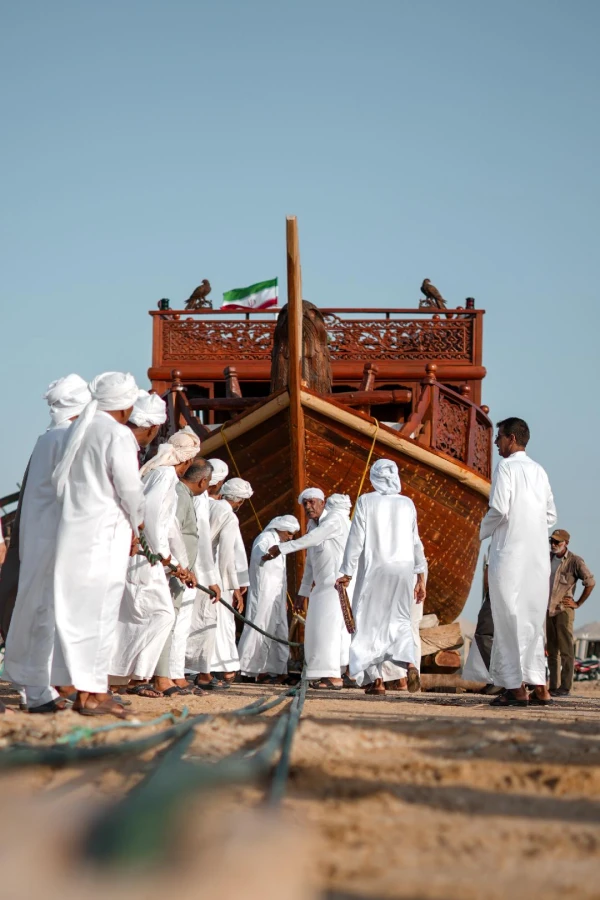
The first traditional wooden lenj (dhow) designed for tourism, named Aurora—meaning "the dawn of hope"—was ceremonially launched during a community celebration in Gouran Port on Qeshm Island.
According to Qeshm Free Zone Media Centre, the ceremony marked the launch of the first traditional wooden lenj designed for tourism, bearing the inspiring name Aurora, symbolising the dawn of hope.
Ali Pouzan, Chief Executive Officer of Gouran Rural Development Cooperative, described the event as a milestone in the revitalisation of the Persian Gulf's maritime cultural heritage. He noted that the project was realised through the collaboration and support of Qeshm Free Zone Organization, Qeshm Island UNESCO Global Geopark, the Ministry of Cultural Heritage, Tourism and Handicrafts, the Ports and Maritime Organization of Iran, UNESCO and ICOM Iran. The vessel was built by Master Abdolrahman Hedri, one of the last remaining masters of Iran's traditional lenj-building craft.
Constructed in full compliance with modern safety standards and equipped with advanced navigation systems, ventilation and visitor facilities, the wooden lenj represents a successful fusion of traditional craftsmanship and contemporary technology. Its hull is decorated with Indigenous motifs, including the Hara mangrove tree and the peregrine falcon, reflecting the close relationship between nature, culture and maritime craftsmanship.
More than a vessel, Aurora symbolises the revitalisation of Indigenous knowledge, the creation of sustainable livelihoods and a forward-looking vision for the local community. Alongside this achievement, Gouran Living Museum, dedicated to safeguarding the traditional lenj-building craft, has played a pivotal role in establishing the area as a National Museum Park and one of Iran's leading centres for maritime tourism.
Latest News
-
روز جهانی صنایع دستی گرامی باد
Published on : May 25, 2025 -

آغاز فصل نوین آموزشهای ژئوپارکی در قشم/ سرمایهگذاری بر دانش جوامع محلی برای توسعه پایدار
Published on : May 25, 2025 -

ششمین دوره مسابقه دورریختنی های ماندنی من
Published on : May 25, 2025 -

روز جهانی بدون پلاستیک گرامی باد
Published on : May 25, 2025 -

۱۴ تیر، روز قلم گرامی باد
Published on : May 25, 2025 -

بازدید مدیرعامل سازمان منطقه آزاد قشم از ژئوسایت تنگه چاهکوه
Published on : May 25, 2025 -
توسعه حفاظت هوشمند در ژئوپارک جهانی قشم
Published on : May 25, 2025 -

برگزاری کارگاههای تخصصی بستهبندی صنایعدستی در قشم
Published on : May 25, 2025 -

روز جهانی محیط زیست گرامی باد
Published on : May 25, 2025 -

خیز جدید ژئوپارک قشم برای ارتقای جایگاه جهانی؛ از حفاظت هوشمند تا توسعه اقتصادی جوامع محلی
Published on : May 25, 2025